Acute Overwhelming Blood Thirst
The RadleysAcute Overwhelming Blood Thirst, abbreviated as OBT, is the term Will Radley uses for Clara Radley’s sudden, powerful response to the smell of blood. The episode at Topshop shows its defining danger: an appetite awakened by a recent killing overwhelms ordinary judgment and draws Clara toward strangers, while panic and self-recognition give her a chance to escape. OBT therefore marks the point at which the Radley family’s hidden condition becomes an immediate threat to other people as well as a source of fear for Clara herself.
Definition and Family Context
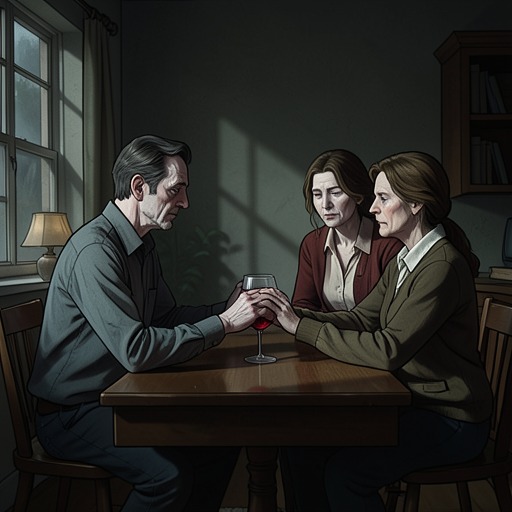
The novel presents OBT as a condition to be managed, not simply a passing feeling. Before Clara understands what has happened to her, Helen Radley explains that the family has passed on an inherited condition that produces a particular kind of hunger. Peter Radley interrupts her attempt to explain it in biological terms and tells Clara directly that they are vampires. That disclosure gives a new meaning to Clara’s recent appetite and illness: what her parents had tried to handle as a health problem is connected to the family’s concealed nature.
The family’s earlier explanations reveal the difficulty of that concealment. Peter, a doctor, considers possible medical consequences of Clara’s refusal to eat meat, including nerve damage and anemia, and tries to think of something that might persuade her to change. Such concerns belong to the ordinary medical language available to the family, but they cannot account for the hunger that emerges after Clara is provoked. The distinction matters: OBT is not presented as a routine dietary complaint, even though the Radleys initially approach Clara’s condition through familiar explanations of illness and food.
The Topshop Episode
Clara first notices an unfamiliar, rich smell during the journey into town on a crowded number 6 bus. The odor disorients her, and the opening of the bus doors brings temporary relief as fresh air clears her senses. Later, while she is trying on clothes in Topshop, the smell returns with greater force. Its presence connects the public setting to the violent experience of the previous night, when Clara killed Stuart Harper after he attacked her.
The scent brings back Clara’s memory of what she did and of the intense excitement that accompanied it. Her reaction is divided: she is horrified by the remembered act, but also unsettled by the knowledge that she might want to experience its excitement again. The uncertainty is central to the episode. Clara cannot immediately separate fear of her own actions from attraction to the power she associates with them.
She realizes that the smell is blood coming from the people changing in nearby cubicles. Among them is Eve Copeland, the friend Clara had persuaded to leave her apartment and get away from her father. Clara steps out in her new clothes and begins moving toward the neighboring changing cubicle, drawn by an urge she has not chosen. Panic intervenes before she pulls back the curtain. Her heart pounds and her limbs tingle as she recognizes what she is about to do, then runs from the changing rooms and through the shop.
Her flight has visible consequences. She knocks over a mannequin wearing a crop top and decorative crucifixes; it falls onto a clothes rack as she continues toward the exit. The security alarm sounds when she runs outside in clothes that still have their tags, but she does not return to the shop. She needs fresh air, and leaving takes priority over the alarm and the unfinished purchase. The episode thus moves from an obscure bodily warning to a near approach toward another person, then to escape.
Naming and Recognition
Afterward, Clara tells Will Radley that she had been frightened in the changing rooms and had run away from Eve because she feared she might do something. Will identifies the experience as an OBT attack and expands the abbreviation as Overwhelming Blood Thirst. His response supplies Clara with a name for an event she has so far experienced as an incomprehensible mixture of scent, memory, attraction, and panic. He also tells her that she will get used to the attacks, presenting them as a recurring possibility rather than an isolated event.
That explanation does not erase the episode’s uncertainty. Clara can describe where the urge led her and why she fled, but naming the condition does not make it harmless or establish that she can always stop it in time. The encounter with Eve makes the stakes personal: the people whose blood triggers the hunger are not anonymous to Clara, and one of them is a friend she has just tried to help. OBT places that relationship under pressure without reducing Clara’s concern for Eve to appetite alone.
Appetite, Abstention, and Risk
The principle printed in The Abstainer’s Handbook, that blood does not satisfy cravings but magnifies them, sets OBT within a wider conflict over blood and self-control. Clara’s episode begins with the smell of blood rather than with drinking it. The stimulus nevertheless links her to the memory of her killing and threatens to carry her toward another person. The distinction between craving and consumption does not make the craving safe: in Topshop, the danger is already present in Clara’s involuntary movement toward the neighboring cubicle.
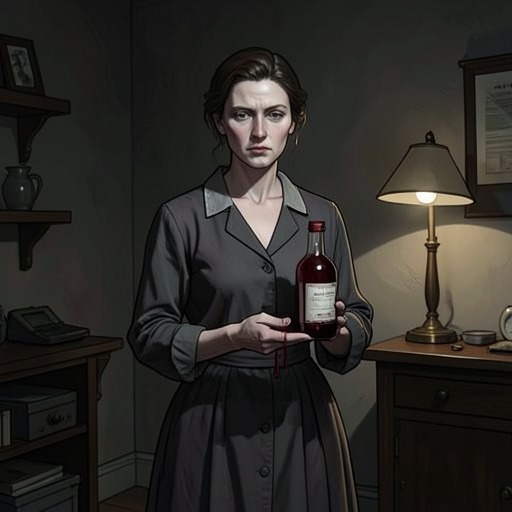
The book also shows Rowan Radley handling a bottle of vampire blood and debating whether to take a small sip before eventually drinking from it. His experience is not identified as an OBT attack, so it should not be treated as the same event. It does, however, provide a contrasting instance of temptation: Clara is pulled toward the blood in living people around her, while Rowan contemplates a bottle and then chooses to drink. Together, these episodes underscore the limits of assuming that blood will settle a vampire’s desire. OBT gives that broader warning a sudden, social form, turning appetite into a threat that must be recognized and resisted in the presence of others.
Narrative Significance
The Topshop sequence makes OBT legible through concrete changes in Clara’s perception and conduct: a smell first encountered on the bus returns in the changing rooms, the memory of Harper’s death accompanies it, and Clara’s route through the shop narrows toward Eve before fear breaks its course. Her escape is a meaningful act of restraint, but not proof that the hunger has disappeared. Will’s terminology places the episode within the family’s account of vampirism, while the scene itself preserves the gap between explanation and control.
OBT consequently complicates the Radleys’ effort to pass as an ordinary family. Their secrecy has encouraged medical and dietary explanations for Clara’s condition, but her response to blood exposes a danger that cannot be managed by reassurance alone. For Clara, the attack is both an involuntary bodily crisis and a test of how she responds to it. She flees before harming anyone in the shop; that outcome matters, but the alarm, the abandoned clothes, and her fear of what she might have done show how costly and uncertain restraint remains.